Forged in The Abyss: King Demogorgon on Sardonic Witchery & The Unapologetic Raw Blasphemy
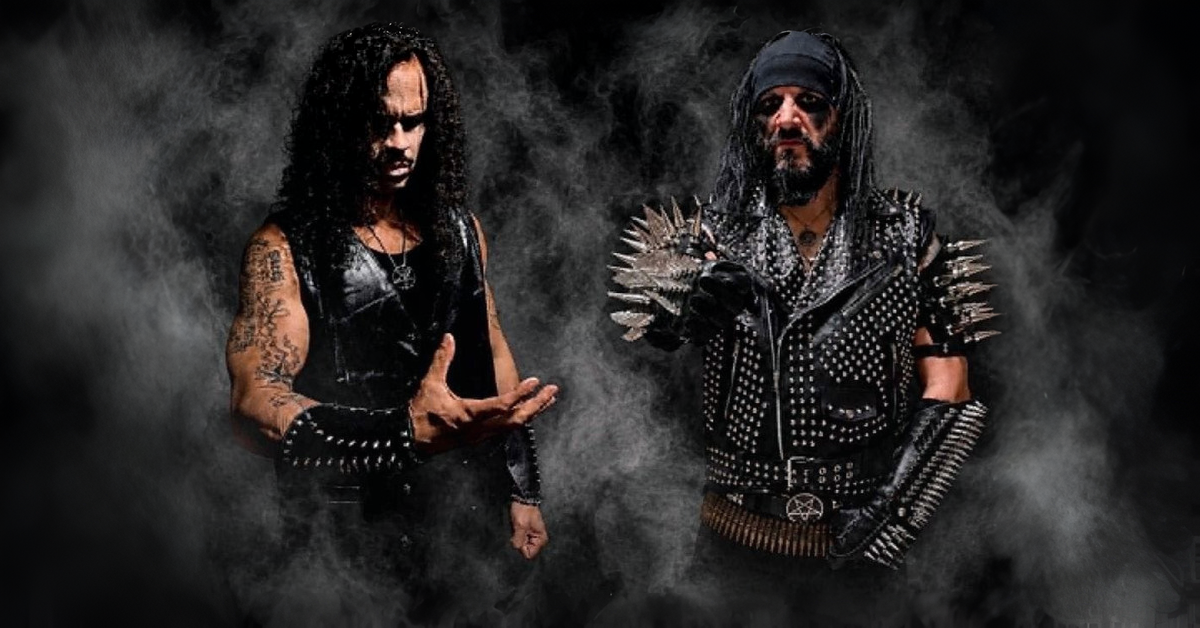
There are bands that simply exist within the underground, and then there are the bands that seem to have been forged by it. Tempered by the chaos within the grungy pits of metal, lies just below the surface a form of untamed raw aggression. With long nights of beer soaked stages, dimly lit crowds soaked with sweat gathering to see their favorite bands. Captivated by the grotesque display that is carried over the crowd through blast beats, fast riffs and visceral screams.
For more than a decade, Sardonic Witchery has carved its own path through the darker territories of extreme metal—where black metal's ritualistic darkness collides with the violence and primitive energy of thrash, and where independence is valued above the more polished mainstream recognition.
Born from the ashes of King Demogorgon's previous work in Portugal, Sardonic Witchery emerged from the depths of the caustic underground in 2012 as a deeply personal musical undertaking—one built around uncompromising expression, occult imagery, old-school extremity, and an unwavering devotion to the very underground that formed his aggressive tone.
Having recently revisited a bit of their history with Under the Sign of the Trident, a fully re-recorded collection that seems to reach back into Sardonic Witcher’s past while simultaneously standing at the threshold of what is to come next. As though opening a dark nexus into something greater. Well, that creation has just been released unto the world as Sardonic Witchery’s fifth full-length album Hell’s Thorns Attack in September under the banner of Firecum Records.
With Sardonic Witchery’s latest release, it seemed like an appropriate moment to glance back into the fog and to peer forward into the murky unknown. We were fortunate enough to sit down and speak personally with the demon himself, the founding member King Demogorgon of Sardonic Witchery. We were able to take a closer look at the origins of Sardonic Witchery’s, the philosophy behind it and the creation of Hell’s Thorns Attack. We even talked more on the meaning of remaining underground within an increasingly commercialized metal landscape and what awaits beyond the approaching horizon as Sardonic Witchery’s continues to scorch a path forward. So without further delay, let’s get into it.
FMP: Before Sardonic Witchery existed, there was already a long history behind you, including your work with Infernal Kingdom in Portugal. Looking back at that period of your life, what was happening internally and musically that eventually made you feel it was time to close that chapter and begin again?
King Demogorgon: Infernal Kingdom was not just another band for me. I spent 11 years of my life with that project, so closing that chapter was a very important and difficult decision. It was a huge part of my development as a musician and as a person, and I learned a lot during those years.
Those years also gave me the opportunity to share the stage with many important names from the underground, including Besatt, Infernal, Acherontas, Inquisition, Ereshkigal, Drengskapur, Cryfemal, Hats Barn, Myrkvid, Sacred Sin, Decayed, Corpus Christii, Morte Incandescent, IRAE, Balmog, Sekhmet, Empty, Merrimack, Osculum Infame, and many others. Those experiences were extremely important to me because they put me directly inside the underground scene and allowed me to experience its energy, people, and culture firsthand.
But eventually I reached a point where I felt that I had grown beyond what Infernal Kingdom represented. My musical ideas were changing, my vision was becoming more personal, and internally I was also in a different place. I didn’t want to keep something alive simply because I had already invested so many years into it. I felt that I needed a completely new beginning - something that would allow me to express myself without limitations or expectations from the past. That’s when Sardonic Witchery started taking shape. So after 11 years with Infernal Kingdom, I decided to close that chapter and start from zero again. Sardonic Witchery was born from that need for independence, and from the desire to create something that was completely mine.
Looking back now, I believe it was the right decision. Without those 11 years of experience, Sardonic Witchery and myself would probably never have become what we are today.
FMP: Sardonic Witchery was born in 2012 as a much more solitary band. What was it about working alone that appealed to you at that particular point in your life?
King Demogorgon: Actually, working alone wasn’t completely new to me. Infernal Kingdom was basically a duo. I composed all of the music, while Naamah Santana was responsible for the lyrics and vocals. We also had live musicians who would perform with us on stage, so in many ways the structure was already quite similar to what Sardonic Witchery would become. The biggest change with Sardonic Witchery was that I took another step forward and became responsible not only for the music, but also for my own lyrics and vocals. For me, that was a very important change because it meant that the entire creative direction was coming directly from me. I could express my ideas through the music, the lyrics, the vocals, the imagery, and the overall concept without having to divide those responsibilities with anyone else. It became a much more personal project. So I wouldn’t say that I simply wanted to be alone. It was more about having complete creative freedom and being able to develop Sardonic Witchery exactly the way I envisioned it. That independence became a very important part of the band’s identity from the beginning.
FMP: When you first created Sardonic Witchery, did you already know exactly what you wanted the band to become, or did its identity reveal itself through the process of writing and recording?
King Demogorgon: I already had a very clear idea of what I wanted Sardonic Witchery to be when I created it in 2012. I knew I wanted something raw, aggressive, dark, and deeply connected to the underground. I wasn’t interested in creating something polished or trying to follow whatever was popular at the time. I wanted the music to have that primitive, violent energy that I personally loved. At the same time, I don’t think you can completely define what a band will become from the very beginning. Sardonic Witchery developed naturally as I continued writing, recording, playing shows, and experiencing different things in life. The foundation and the attitude were always there, but the music evolved with me.
The early material was more focused on raw black metal, but over the years I started bringing in more thrash and speed metal influences. That evolution eventually became very clear with Hell’s Thorns Attack, where the black metal foundation is still there, but the music is much more aggressive, fast, and heavily influenced by old-school thrash. So I would say I knew the spirit and direction of Sardonic Witchery from the beginning, but I didn’t know exactly where the journey would take us. The identity became stronger and more defined through the years, and I think that’s a natural part of being an underground band.
FMP: The earliest Sardonic Witchery material was extremely personal it seemed, particularly Hidden Shadows. What parts of yourself were you trying to confront or express through that first material that you hadn't been able to express through your previous bands?
King Demogorgon: Hidden Shadows was extremely personal to me because Sardonic Witchery was the first time I was putting not only my music, but also my own words and my own voice into the project. With Infernal Kingdom, I was already composing the music, but the lyrics and vocals were handled by Naamah Santana. With Sardonic Witchery, everything suddenly came directly from me. The title Hidden Shadows itself reflects a lot of what I was going through at that time. There were things inside me-anger, frustration, darker thoughts, experiences, and emotions-that I didn’t necessarily express openly in my everyday life. Music became the place where I could bring those things to the surface. I wasn’t trying to write songs simply to tell people what I was feeling. For me, it was more about releasing those feelings and turning them into something aggressive and creative. The darkness in the music wasn’t an act or an image I was trying to create. It was a genuine reflection of what was inside me.
That’s one of the reasons those early recordings are so important to me. They weren’t necessarily perfect from a technical perspective, but they were honest. There was no formula, no commercial intention, and no concern about what people would think. It was simply me putting my thoughts, my anger, and my darker side into music. In that sense, Hidden Shadows became the real beginning of Sardonic Witchery-not just as a musical project, but as a much more direct representation of who I was.
FMP: The name Sardonic Witchery has existed for more than a decade now. Has the entity behind that name become something different from what you originally envisioned in 2012?
King Demogorgon: In the beginning, I think I saw Sardonic Witchery as something completely personal. It was a new beginning, and I was mainly focused on expressing myself and creating something that represented where I was at that point in my life.
But that changed after the first Sardonic Witchery live show.
That’s when I started to realize that this project was becoming something different from the other bands I had been involved with before. I remember being in the pit and hearing people shouting the name of my old project, Infernal Kingdom. That really hit me. I started to understand that what I had done in the past wasn’t simply another band that I had left behind. I had actually built something that people in the underground remembered and respected.
And the crazy part was that this was happening on the other side of the world, in the USA. I had come from Portugal, started this new project, and suddenly I was hearing people in the pit recognizing my past work. That gave me a completely different perspective on Sardonic Witchery.
I realized that I wasn’t starting completely from zero. There were already underground maniacs who knew what I had done before and were interested in seeing what I was going to do next. I felt that I had earned a certain amount of respect through everything I had done before, and I didn’t want to throw that away. Instead, I wanted to carry that essence forward and build something even stronger.
From that moment, Sardonic Witchery stopped feeling like something that existed only for me. It became something that connected me with people who had been following my work for years, even before Sardonic Witchery existed.
That realization gave me a lot of power and motivation to continue. It made me want to take the project further and see how far I could push it. Looking back, I think that first live show was the moment when Sardonic Witchery truly started becoming an entity of its own.
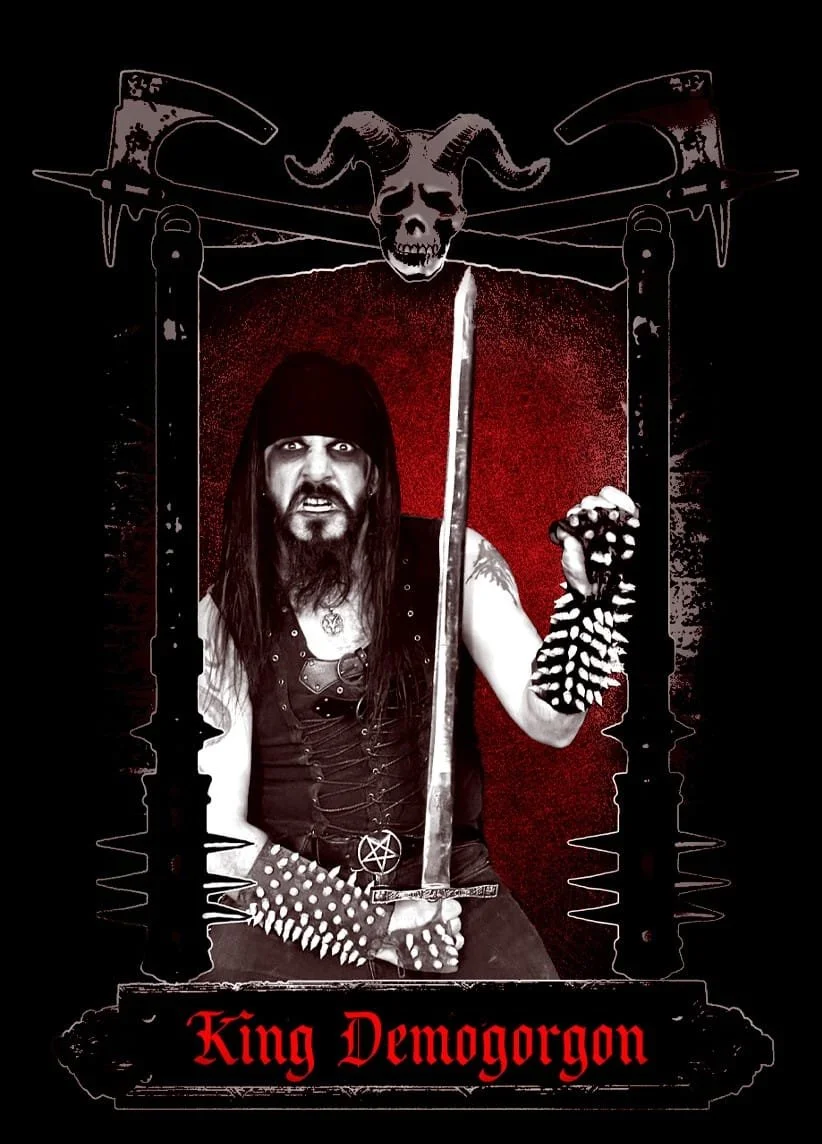
FMP: More than a decade can change the person behind the band, even when the band itself remains fiercely consistent. Looking back at the beliefs that gave birth to Sardonic Witchery, which convictions have only grown stronger with time—and which have been challenged by the person you've become?
King Demogorgon: I think the convictions that were there when I started Sardonic Witchery have actually become much stronger with time. The biggest one is independence. I’ve always believed that underground metal should be about expression first, not about trying to fit into a market or following what is currently popular. After more than a decade, that belief is even stronger. I also believe much more strongly in the importance of the underground itself. When I started, I understood the underground mainly from the perspective of being a musician. But after all these years, traveling, playing shows, meeting people, sharing stages, and seeing how many people still support extreme metal without caring about commercial success, I understand it on a much deeper level.
What has changed is that I’ve become more selective about where I put my energy. When I was younger, I probably cared more about proving myself and accepting opportunities just because they were opportunities. With time, I’ve learned that not everything is worth doing. I don’t need to be everywhere, and I don’t need to be accepted by everyone. I’ve also learned that being underground doesn’t mean refusing to evolve. That’s something that has changed in my thinking. Sardonic Witchery has evolved musically over the years, and Hell’s Thorns Attack is a good example of that. We can change our sound, bring in new influences, and still remain completely true to the spirit that created the band. If anything, the biggest difference between the person who started Sardonic Witchery in 2012 and the person I am today is experience. I’ve learned from people, from mistakes, from good experiences and bad ones. But I haven’t lost the hunger that made me start the band in the first place.
FMP: There is a very strong sense of old-school black/thrash tradition in Sardonic Witchery. What is it about the primitive, aggressive character of early extreme metal that still resonates with you when so much modern metal has moved toward technicality and production?
King Demogorgon: For me, it’s the feeling. That’s always been the most important thing. When I listen to old-school extreme metal, I don’t listen to it because the production is perfect or because the musicians are showing how technically good they are. I listen because it has an energy and an attitude that I don’t find in a lot of modern metal. There is something very primitive about those old records. The riffs are direct, the drums are aggressive, the vocals are vicious, and you can feel the personality of the people behind the music. Sometimes you can even hear the imperfections, and honestly, I think those imperfections are part of what makes the music powerful. I have nothing against technical or modern metal. There are incredibly talented musicians and great bands doing that. But for Sardonic Witchery, technicality has never been the objective. I don’t want someone to listen to a song and think, “Wow, look how complicated that riff is.” I want them to feel like they’ve been punched in the face. That primitive aggression is something I don’t think you can replace with production. You can have the best studio, the cleanest mix, hundreds of layers and perfect editing, but if the music doesn’t have that fucking spirit, it means nothing to me.
That’s also why black metal and thrash metal have always made sense together for Sardonic Witchery. Black metal gives us the darkness, atmosphere and hatred, while thrash gives us speed, violence and that relentless attack. When you put those things together, you get something very raw and physical.
With Hell’s Thorns Attack, I think we pushed that side of Sardonic Witchery even further. It’s still rooted in black metal, but there’s much more thrash and speed in the attack. We weren’t trying to modernize the sound. We were trying to make it more violent.
At the end of the day, I don’t care if something was recorded in 1985 or 2026. If it has that fucking fire, I’ll listen to it. That’s what I’m looking for in extreme metal-and that’s what I want Sardonic Witchery to give maniacs.
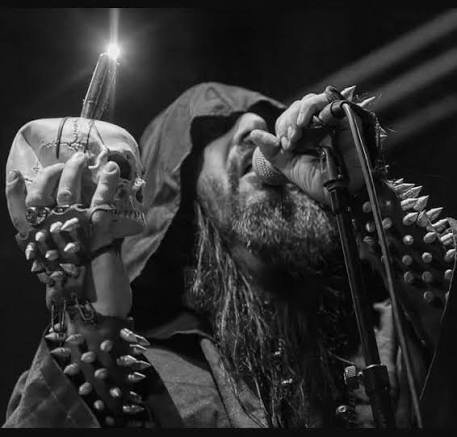
FMP: Sardonic Witchery has never seemed interested in separating the music from its darker philosophy. How important is it for you that the listener understands the mentality behind the music, rather than simply experiencing it as another extreme-metal record?
King Demogorgon: I think the philosophy is important, but I don’t believe a listener has to understand everything exactly the way I do. Music is very personal, and everyone can take something different from it. What matters to me is that there is something real behind what Sardonic Witchery does.
I’ve never wanted the darkness, the occult imagery, the hatred or the aggression to be something we simply put on as a costume because it looks extreme. For me, those elements are part of the identity and atmosphere of the band. They come from the way I see the world, the things that have influenced me, and the experiences I’ve had throughout my life. At the same time, I’m not interested in explaining every lyric or telling people exactly what they should think. I prefer to give people the music and the atmosphere and let them interpret it through their own minds. If someone listens to a song and it makes them feel anger, darkness, rebellion, or simply gives them the energy to survive a fucking bad day, that’s already meaningful to me.
What I don’t want is for Sardonic Witchery to become just another extreme-metal record where the image and the music have nothing behind them. There has to be an essence. There has to be a reason why the music exists. For me, Sardonic Witchery is an extension of myself, and now also of G. Lucis Ruina, who has become an important part of the band’s creative identity. We bring our own ideas and perspectives into the music, but we share the same desire to keep the spirit of Sardonic Witchery genuine and uncompromising. The music, lyrics, artwork, live performance, and overall attitude are all connected. You can separate those things technically, but you can’t really separate them spiritually. So yes, I want people to feel the mentality behind the music. But I don’t need them to understand it exactly as I do. I want them to feel that there is something genuine underneath all the noise, aggression and darkness. That’s much more important to me than simply being another extreme-metal band.
FMP: You've described Sardonic Witchery through ideas such as Satanism, lust, war, hedonism and spiritual liberation. Are these subjects primarily artistic vehicles for you, personal beliefs, or something that exists somewhere between the two?
King Demogorgon: It’s definitely somewhere between the two. These subjects are part of the artistic language of Sardonic Witchery, but at the same time, they come from real thoughts, beliefs, feelings and experiences. I don’t use them simply because they sound dark or because they’re expected from a black metal band. Satanism, for example, has always represented something very important to the identity of Sardonic Witchery. For me, it’s connected with individualism, rebellion, freedom, questioning imposed values, and refusing to blindly follow what society tells you that you should believe. It’s about spiritual liberation and taking responsibility for your own path. The same applies to subjects like lust and hedonism. I don’t see them simply as provocative themes. They can represent desire, freedom, pleasure, human instinct and the rejection of unnecessary restrictions. War can represent the violence of humanity, conflict, destruction, but also the darker side of our nature. At the same time, I don’t want to turn Sardonic Witchery into a fucking philosophy textbook. These ideas become music, lyrics, imagery and atmosphere. Sometimes they are very direct, and sometimes they are symbolic or exaggerated because that’s part of the artistic language of extreme metal. But I think my perspective is changing again. I’m already starting to structure ideas for the next album, and I can already see some major differences compared with what I’ve been talking about throughout the previous Sardonic Witchery releases.
I’ve become increasingly furious about the way organized religions have imposed their beliefs on people and societies. I’ve been exposed to religious traditions throughout my life, and today I’m questioning those systems more aggressively than ever. I’m particularly interested in the influence of Middle Eastern-origin religions and the way religious doctrines have been spread, imposed, and used to control people’s lives and choices. At the same time, my criticism isn’t limited to one religion or one culture. I’m against the idea of any religious system imposing its beliefs on people who don’t choose to follow them. That anger is already influencing the ideas I’m developing for the next album. I don’t want to simply repeat the same anti-religious themes I’ve explored before. I want to go deeper into imposed belief, obedience, religious authority, manipulation, fear, and the conditioning of people to accept doctrines without questioning them. So there could be some major differences in the next album. The darkness, aggression and spirit of Sardonic Witchery will still be there, but I think the ideas behind it may become much more confrontational and philosophical. That’s one of the things I love about creating music: Sardonic Witchery can evolve as I evolve. I’m not interested in pretending that my thoughts today have to be exactly the same as they were ten or fifteen years ago. If something makes me furious, inspires me, or makes me question the world around me, I want to be able to turn that into music.
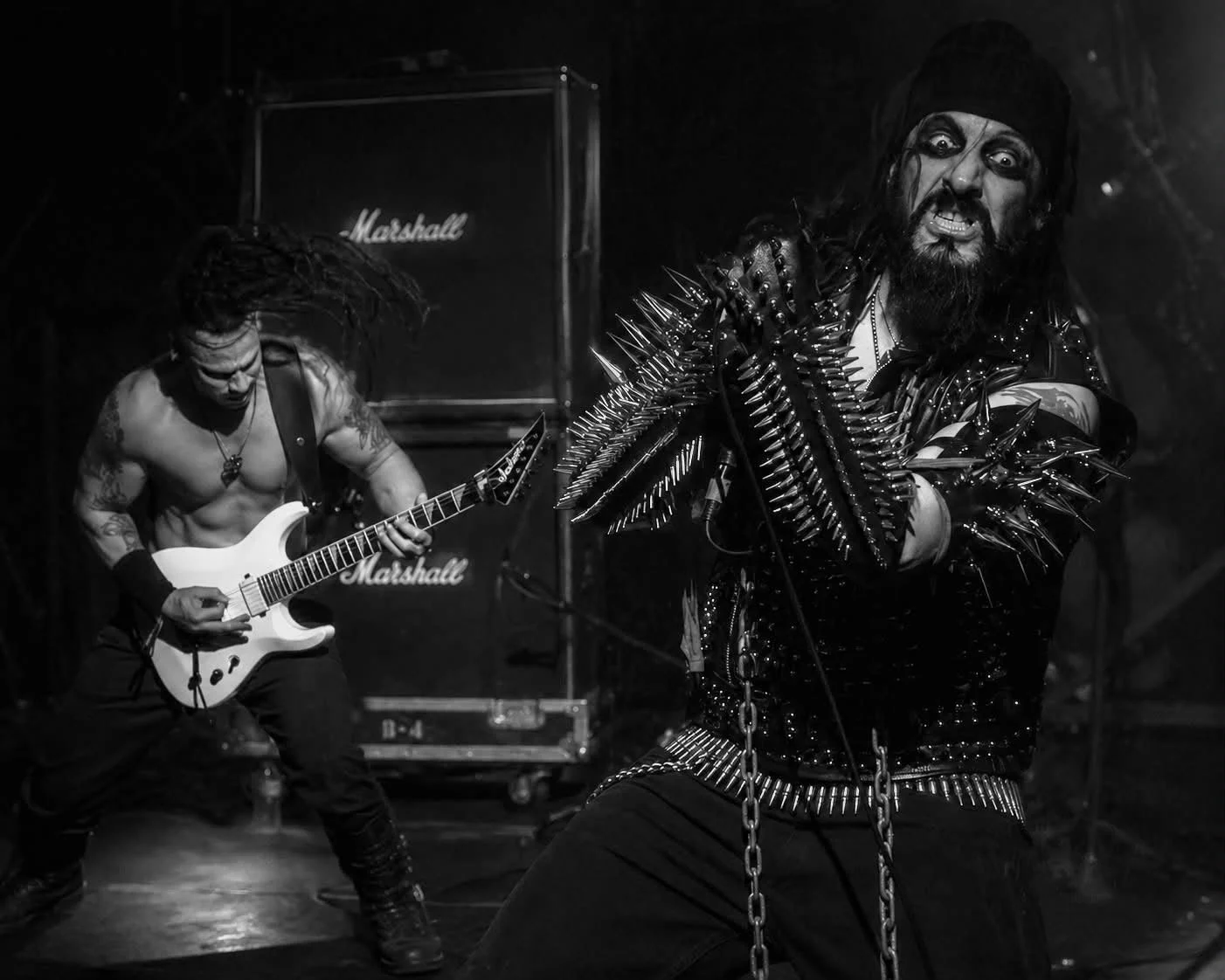
FMP: There is a fine line between remaining faithful to your convictions and becoming imprisoned by them. After more than a decade as Sardonic Witchery, have you ever had to question whether something you once considered uncompromising was actually something you had simply become accustomed to?
King Demogorgon: Yes, of course I’ve questioned myself over the years. I think anybody who says they never question their own convictions is probably lying. But honestly, when I look back, I realize that not that much has actually changed. I’ve questioned many things, I’ve experienced a lot more, and I’ve seen different sides of people and the underground that I couldn’t have understood 15 years ago. But when I go back to the beliefs I had back then, I still find myself thinking, “Fuck, I was actually right.” The core of what I believed in hasn’t really changed. My attitude toward independence, underground metal, freedom of expression, anti-conformity and refusing to follow something just because everyone else is doing it is basically the same. If anything, experience has reinforced many of those convictions. What has changed is my understanding of them. I’m older, I’ve experienced more, and I have a much wider perspective now. So I may express certain ideas differently, or I may approach them from another angle, but the foundation is still there.
Musically, it’s the same thing. Sardonic Witchery has evolved, but I never felt the need to abandon what made the band what it is. Hell’s Thorns Attack sounds different from the early material, but the aggression, the underground spirit and the mentality behind it are still there.
I think the biggest mistake would be to change your convictions simply because time has passed. You should question yourself, absolutely-but if after all that questioning you still believe the same thing, then maybe there was nothing wrong with your original conviction in the first place.
So, honestly, I haven’t had some huge revelation where I suddenly realized everything I believed 15 years ago was wrong. Quite the opposite. A lot of the time, I look back and realize I was right-I just understand better now why I felt that way.
FMP: Having both dived into the past history and philosophical beliefs behind Sardonic Witchery, I would like to shift towards the Under The Sign of The Trident and your mindset around the undertaking of this compilation and a bit on what it was like to revisit those older recordings again. I would also like to dive into your latest full-length album Hell's Thorns Attack and what it was like shifting from revisiting the past to creating the future.
King Demogorgon: Under The Sign of The Trident actually came about for two main reasons.
The first one was G. Lucis Ruina. He had already been playing these songs live with me for around three years, and by the time he officially became a member of Sardonic Witchery, I felt it was the right moment to revisit some of that older material with him.
I didn’t want G. Lucis Ruina to come into the band and only be involved with whatever came next. I wanted him to understand and connect with the history of Sardonic Witchery as well. He had already been performing those songs with me live for years, so giving him the opportunity to put his own touch on them felt very natural. It was also a way of showing that joining Sardonic Witchery wasn’t just about moving forward-it was also about respecting and honoring what came before. Those older songs are part of the band’s history, and now he is part of that history too. Having his contribution on the re-recordings gave the old material a different energy without destroying its original essence. The second reason was much more practical. At the time, we were looking for the right labels to release Hell’s Thorns Attack, and we knew that finding the right partners and organizing everything properly would take some time. Rather than just sit around waiting for the album, we decided to use that time productively. So we created Under The Sign of The Trident as a way to revisit our history, but also to give the fans something new to hear and something we could take with us to the upcoming shows while we were working on the release of the new album. In a way, it worked perfectly because it connected both sides of Sardonic Witchery. We were looking back at where we came from while, at the same time, preparing everything for where we were going next. It wasn’t originally planned as some huge statement about the past. It was something that made sense for us at that particular moment-and ultimately became much more meaningful because it allowed G. Lucis Ruina to become part of that history too.
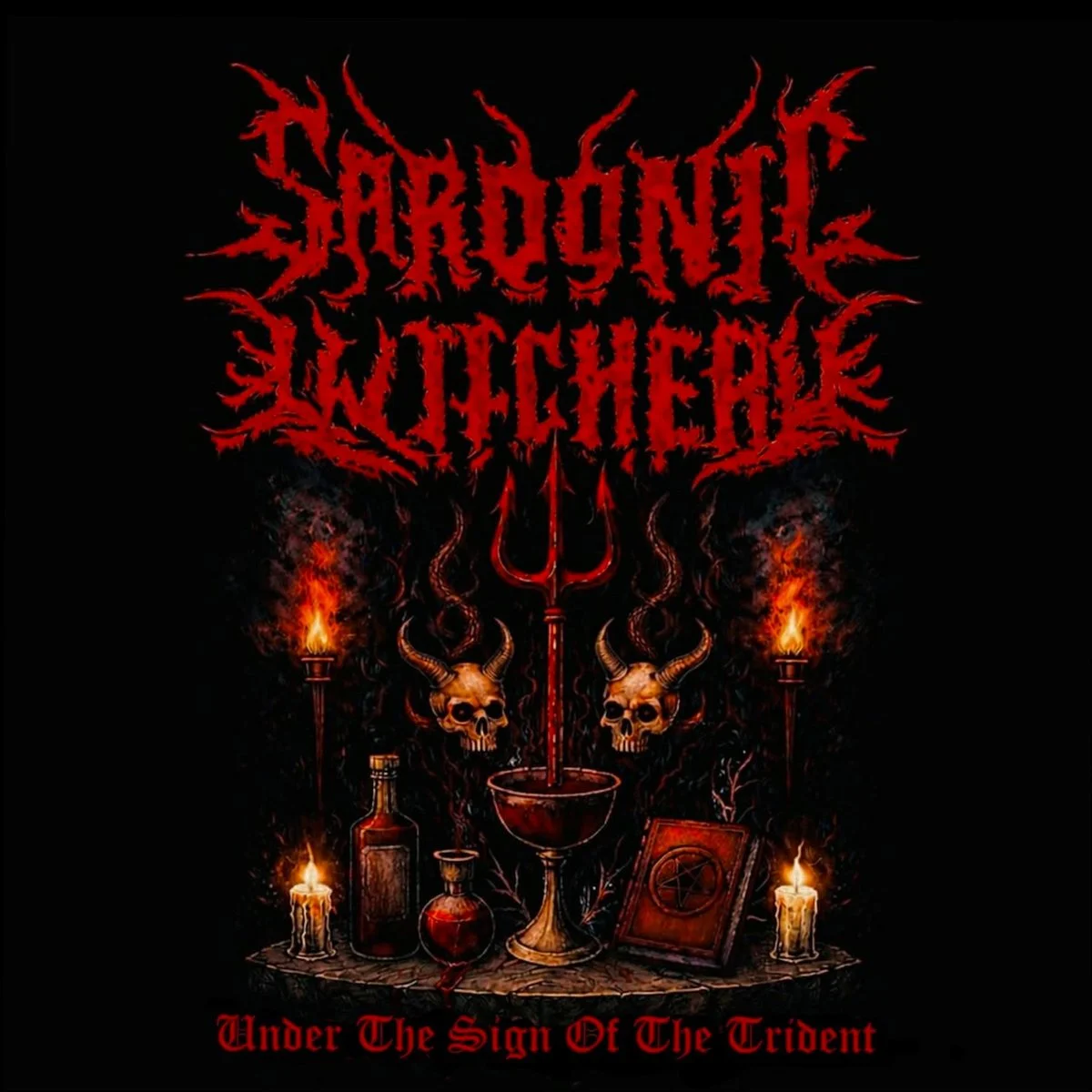
FMP: Under The Sign of The Trident forces you to revisit material from different stages of Sardonic Witchery. When you heard those songs again through the ears of the musician you are today, what did they reveal to you about the person who originally wrote them that you perhaps couldn't see at the time?
King Demogorgon: Honestly, when I listened to those songs again, I didn’t feel like I was listening to some completely different person. I still recognize myself there. The anger, the aggression, the darkness, the fucking attitude-it was already there. But I wouldn’t say I was more angry back then. Actually, I’m probably more angry now. I’ve experienced a lot more, I’ve seen a lot more, and some things that piss me off today are much stronger than they were when I wrote those songs. What surprised me was how much of the same mentality was already there. I understand certain things differently today, but when I listen to those songs, I can still feel the same fucking essence. That’s important to me because it shows that Sardonic Witchery wasn’t some character I created for a few years and then abandoned. It has always been a real part of me. And I also have to remember that the conditions I had to record those songs back then were completely different from what I have today. I didn’t have the same equipment, the same resources, the same studio possibilities, or the same experience. So when I hear those old recordings now, I don’t necessarily hear bad songs-I hear good ideas that were recorded with the limitations I had at the time. That’s one of the main reasons I wanted to re-record them. I wanted to give those songs the sound, power and production that I wasn’t able to give them back then, without destroying what made them what they were. I didn’t want to take an old song and turn it into something completely different just because we had better conditions now. The songs belong to that period of my life, and I wanted to respect that. We just gave them a fucking stronger weapon. And having G. Lucis Ruina involved made it even more interesting. He had already been playing many of these songs live with me for years, so he already understood them from that side. Now he could put his own touch into them and become part of that history.
So honestly, revisiting those songs didn’t make me think, “Fuck, I was so different back then.” It actually made me think, “Fuck, I haven’t changed as much as I thought.” The sound evolved, my life changed, Sardonic Witchery became much bigger, and I have much better conditions to record today-but that fucking fire was already there. And if anything, the fire is even bigger now.
FMP: When you returned to those older recordings, did you discover any elements of Sardonic Witchery that had been buried beneath the years—an instinct, a riffing approach, an atmosphere or even a certain kind of aggression—that you realized still belonged in the band's future?
King Demogorgon: Obviously, the way I write music has evolved. I have more experience now, I understand production better, and I have much better conditions to record than I had when those songs were originally made. But I’m not alone anymore. Sardonic Witchery is now a duo, and G. Lucis Ruina has brought a lot more to the band than just being a fucking brutal guitar player. He’s also an excellent producer with his own studio, and that gives us a lot more possibilities to actually do the things I wanted to do years ago but probably didn’t have the capacity to achieve completely by myself.
That’s a big difference. Before, sometimes I had an idea in my head but didn’t necessarily have the technical knowledge, equipment, or resources to turn it into exactly what I wanted. Now I have someone beside me who understands the music and also understands the production side of it.
So it’s not that we went back to the old material and discovered some forgotten formula. The old instincts were always there. What has changed is our ability to execute them. I can have an idea now and say, “This is what I want to hear,” and together we have a much better chance of actually making it happen.
That’s also important for the future of Sardonic Witchery. G. Lucis Ruina isn’t there simply to play guitar. He’s part of the creative and production process, and that opens doors that I couldn’t necessarily open alone before. So when I look at the old recordings, I don’t think about what we need to bring back. I think about how much more we can do now with the same fucking spirit.
FMP: Revisiting your earlier work can be both a reminder of where you came from and a temptation to remain there. While working on Hell’s Thorns Attack, did you ever find yourself consciously resisting the urge to recreate an earlier version of Sardonic Witchery?
King Demogorgon: No, honestly, I never felt the need to recreate an older version of Sardonic Witchery. Under The Sign of The Trident was our opportunity to look back and honor the past. Hell’s Thorns Attack was about moving forward. When I asked G. Lucis Ruina to join me on this journey, I told him: “Let’s make the album I always wanted to do but couldn’t do by myself. I’m sure together we can finally make the album I’ve wanted to do for years.”
And that’s exactly what happened. He brought his guitar playing, his production skills and his own ideas, and suddenly I had the tools and the right person beside me to make the record I had been carrying in my head for years. With Sardonic Witchery, every album has to be better than the previous one. Barbaric Evil Power was our best album at the time, so the next one had to beat it. We don’t make a new album just to have another album-we have to fucking surpass ourselves every time. So Hell’s Thorns Attack is now our best album ever. Can you understand what’s coming next? Yes, of course - you already fucking know. Our next album will be our new best album again!
FMP: Do you hear Under The Sign of The Trident as the closing of a chapter in Sardonic Witchery's history, or does it feel more like you've taken the ashes of that earlier era and carried something from them into a new one?
King Demogorgon: I see it more as carrying something forward. Under The Sign of The Trident definitely closes a chapter in the sense that we revisited that older material and gave it the treatment it deserved, but we are not putting those songs to rest. We will keep playing them live.
Those songs are part of Sardonic Witchery’s blood. They are where we came from, and you can’t erase that. What we did was take those old songs, give them new life, and bring them into the present with the energy and experience we have today. And for G. Lucis Ruina, it was especially important. He wasn’t there when those songs were originally created, but he had already been playing many of them live with me for years. Re-recording them gave him the opportunity to become part of that history and put his own touch on it. So I wouldn’t say we took the ashes of the past and left them behind. We took the fire. The old material is still part of us, and those songs will continue to be part of our live set. Under The Sign of The Trident was looking backward, but it was never meant to keep us there. It was more like closing one chapter properly while carrying everything important from it into the next one.
FMP: When you confront your own past as an artist, there is always the possibility of discovering something unfinished beneath it. Did Under The Sign of The Trident expose any unfinished thoughts, emotions or ideas that demanded to be expressed on Hell's Thorns Attack?
King Demogorgon: Not really. I wouldn’t say there was something unfinished that needed to be fixed. Those old songs were exactly what they needed to be at that time. But going back to them definitely brought back memories and feelings. And after all those years, of course I’m not the same person anymore. Everything I’ve experienced since then naturally influenced the way I write music today. So Hell’s Thorns Attack isn’t about finishing something from the past. It’s about everything that happened to me between those records and where I am now.
FMP: Between revisiting the musician you were and becoming the musician you are now, was there anything about your relationship with Sardonic Witchery that you realized you no longer needed to prove?
King Demogorgon: Yeah, definitely. I don’t feel like I have much left to prove to people in general. But there is one thing I still care about: proving to the musicians who come on stage with us that they are in good hands. I don’t want them to feel like they’re just hired live musicians who come in, play the songs, and leave. I want them to feel that they are part of Sardonic Witchery too. They are a very important part of the band, especially when we’re on stage representing it together. I want them to trust me, trust G. Lucis Ruina, trust the project, and know that we’re going to do everything we can to make things happen properly. After all these years, I don’t need to prove that Sardonic Witchery belongs in the underground.
What I want to prove now is to the people standing beside us on stage that they are part of this fucking journey too—and that they are in good hands with me and G. Lucis Ruina.
FMP: The title Hell's Thorns Attack can be perceived immediately as confrontational. What does that phrase represent to you? Is it an image, a state of mind, an attack against something, or something more personal?
King Demogorgon: For me, it’s more a state of mind. Hell's Thorns Attack is about aggression, but not necessarily an attack against one specific thing or person. It’s more about that feeling of pushing back against everything that tries to control you, limit you, or tell you how you’re supposed to live.
The title came from the feeling of the album itself. It’s fast, violent and aggressive, but there is also something very direct about it. I wanted a title that sounded like an attack before you even hear the first song. And Hell's Thorns Attack represents that darker side of Sardonic Witchery-the pain, anger, chaos and negativity that can surround us. When those thorns attack, you don’t just stand there and take it. You fucking attack back. That’s basically the mentality of the album: no surrender, no apologies, no trying to make ourselves more comfortable for anybody else. Just attack.
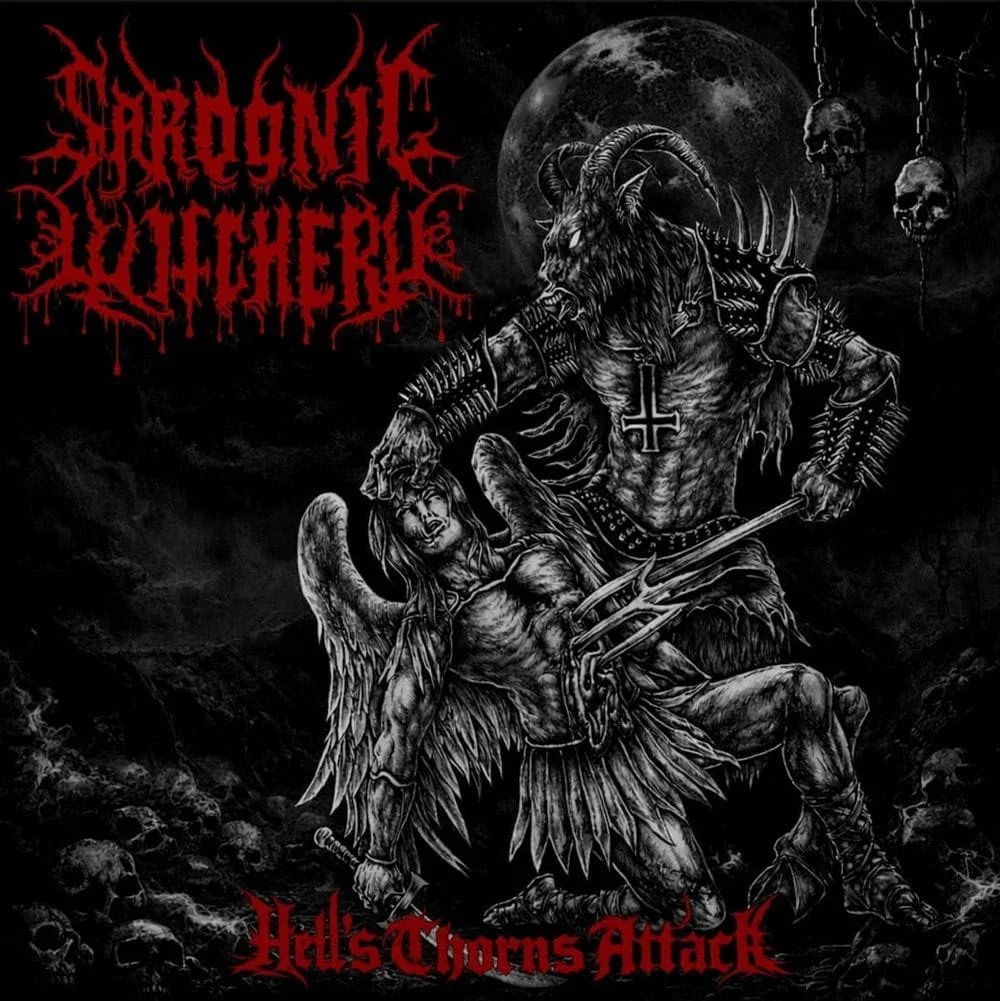
FMP: Was there anything you rediscovered within those older songs that you wanted to bring forward into Hell's Thorns Attack-or, conversely, anything you realized you had completely outgrown?
King Demogorgon: Not really. I don’t think there was anything I needed to bring back or anything I had to leave behind. The old songs already belong to their time, and Hell's Thorns Attack belongs to now. What I did realize is that the aggression was always there. The difference is that today I have much more experience and much better possibilities to turn that aggression into exactly what I hear in my head. So I didn’t want to recycle the past. I wanted to take that same fucking fire and push it much further. I didn’t bring the old Sardonic Witchery into Hell's Thorns Attack. I brought the essence-and then we fucking pushed it forward.
FMP: Hell's Thorns Attack carries an especially hostile sense of aggression. Was that something you consciously pursued during the writing process, or did the aggression emerge naturally from whatever you were trying to express?
King Demogorgon: I think it came naturally. I wasn’t sitting there thinking, “Okay, now I need to make this album more aggressive.” The aggression was already inside us, and it naturally came out through the music. At the same time, we knew exactly what we wanted the album to feel like. We wanted it fast, violent, fucking direct, with that old-school black/thrash energy. So there was definitely a conscious direction, but we didn’t have to force the aggression.
The aggression wasn’t something we added to the album. It was already inside us-we just fucking unleashed it.
FMP: The aggression on Hell’s Thorns Attack often feels directed rather than merely atmospheric. Beneath that hostility, what—or perhaps who—is Sardonic Witchery confronting this time?
King Demogorgon: This time, I think we’re confronting a lot more than just one thing. It’s the fucking bullshit around us-the things that try to control people, religion, hypocrisy, authority, obedience, and everything that tells you how you’re supposed to think or live. It’s not about attacking one person or one group. It’s about confronting the mentality behind those things. And honestly, some of that anger comes from getting older. You see more, you understand more, and sometimes you become even more fucking furious. So Hell’s Thorns Attack is not just aggression for the atmosphere. We’re confronting everything that pisses us off-and we’re turning that fucking anger into music.
FMP: There is an interesting contradiction on Hell's Thorns Attack: the record feels more developed and deliberate, yet it retains something primitive and hostile. How do you allow yourself to mature as a musician without allowing that maturity to sterilize the instinct that made the music dangerous in the first place?
King Demogorgon: I think that’s exactly the balance we wanted. We have more experience now, we know more about writing and production, and we have much better possibilities than we had years ago. But none of that means we have to lose the fucking instinct.
For me, maturity is knowing how to use the tools better without becoming afraid to be primitive, aggressive or fucking dirty when the music needs it.
G. Lucis Ruina and I can be more precise with the production, the arrangements and the guitars, but we’re not trying to make everything perfect. Sometimes the imperfections, the rawness and the violence are exactly what make it feel alive. We matured as musicians, but we didn’t fucking tame ourselves.
FMP: Now that Hell's Thorns Attack has existed outside the process of creating it and you've had some distance from the record, has anything revealed itself to you that you were too close to the music to recognize while making it?
King Demogorgon: Honestly, not really. I’m still too close to it! But one thing became even clearer to me after hearing it finished and seeing the reaction from people: we really managed to make the album we had in our heads. While we were recording, we were focused on every fucking detail, so sometimes you lose the bigger picture. Now that it’s out, I can hear it more as a complete record. And what I hear is exactly what we wanted-fast, aggressive, raw, but still more developed than anything we’ve done before. So I didn’t discover something completely different in the album afterward. I just realized even more clearly that we fucking nailed what we were trying to do.
FMP: Sardonic Witchery occupies an interesting space between the primitive violence of black metal and the sharper attack of thrash. When you're writing, do those two sides serve different purposes—or have they become so intertwined that you no longer distinguish between them?
King Demogorgon: For us, they’ve become pretty fucking intertwined. We don’t sit down thinking, “Now we’re going to write a black metal riff, and now we’re going to write a thrash riff.” We just write what feels right for Sardonic Witchery. The black metal side gives us the darkness, the atmosphere and that primitive aggression, while the thrash side brings the speed, the attack and the fucking energy. But by now, those things are so connected that we don’t really separate them anymore. That’s probably what makes Hell’s Thorns Attack sound the way it does. We don’t choose between black, thrash or heavy metal-we fucking smash them together and make Sardonic Witchery.
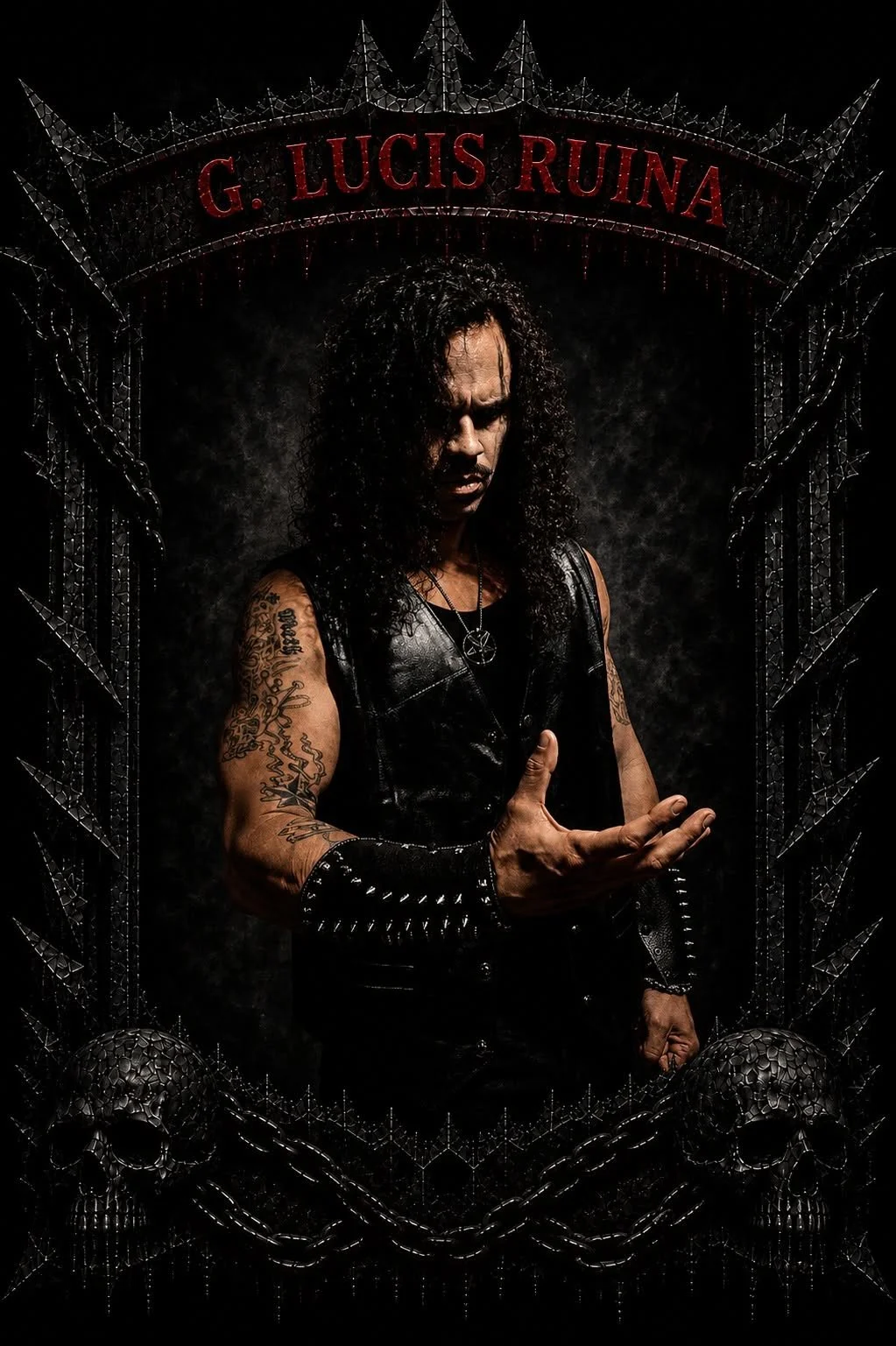
FMP: G. Lucis Ruina's involvement represents an important part of the current incarnation of Sardonic Witchery. When two musicians bring their own instincts into the same creative space, there is inevitably some friction. Where did his approach to guitars, bass and production challenge your instincts, and what came from that tension? As you were once forged within the depths of the often caustic and aggressive underground, emerging as an unapologetic and unrelenting force. I would like to talk a bit on this and what the underground both represents for yourself and your current thoughts about what exactly the underground is today.
King Demogorgon: Honestly, with G. Lucis Ruina, I don’t see the differences as friction in a negative way. Of course, we don’t always think exactly the same, and that’s actually important. He has his own approach to composition, guitars, bass and production, and sometimes he will hear something differently than I do. We talk, we try things, and sometimes his idea wins, sometimes mine does. That’s what makes it a real collaboration. He isn’t here to turn Sardonic Witchery into something else. He understands the identity of the band, but he also brings his own fucking personality into it. And because he’s also an excellent producer, he can take some of the ideas I’ve had in my head for years and help turn them into something real. That’s probably where he challenged me the most-not by changing what Sardonic Witchery is, but by showing me that some things I thought I couldn’t achieve alone were actually possible.
As for the underground, that’s something very difficult for me to separate from Sardonic Witchery. I was forged there. The underground gave me everything-the bands I discovered, the people I met, the shows, the fucking dirty clubs, the friendships, the experiences. That’s where I learned what this music means to me. And I don’t think the underground is dead. It has changed. Social media, streaming and the internet have made everything much more accessible, but at the same time they’ve also made the underground much bigger and more exposed. For me, the underground isn’t about having ten people in a basement anymore. It’s about attitude. It’s about doing this because you fucking believe in it, not because you expect fame or money or mainstream recognition.
As long as there are maniacs still creating music, organizing shows, buying physical releases, traveling to see bands and supporting each other without giving a fuck about the mainstream, the underground is alive. And Sardonic Witchery is going to remain fucking buried in it.
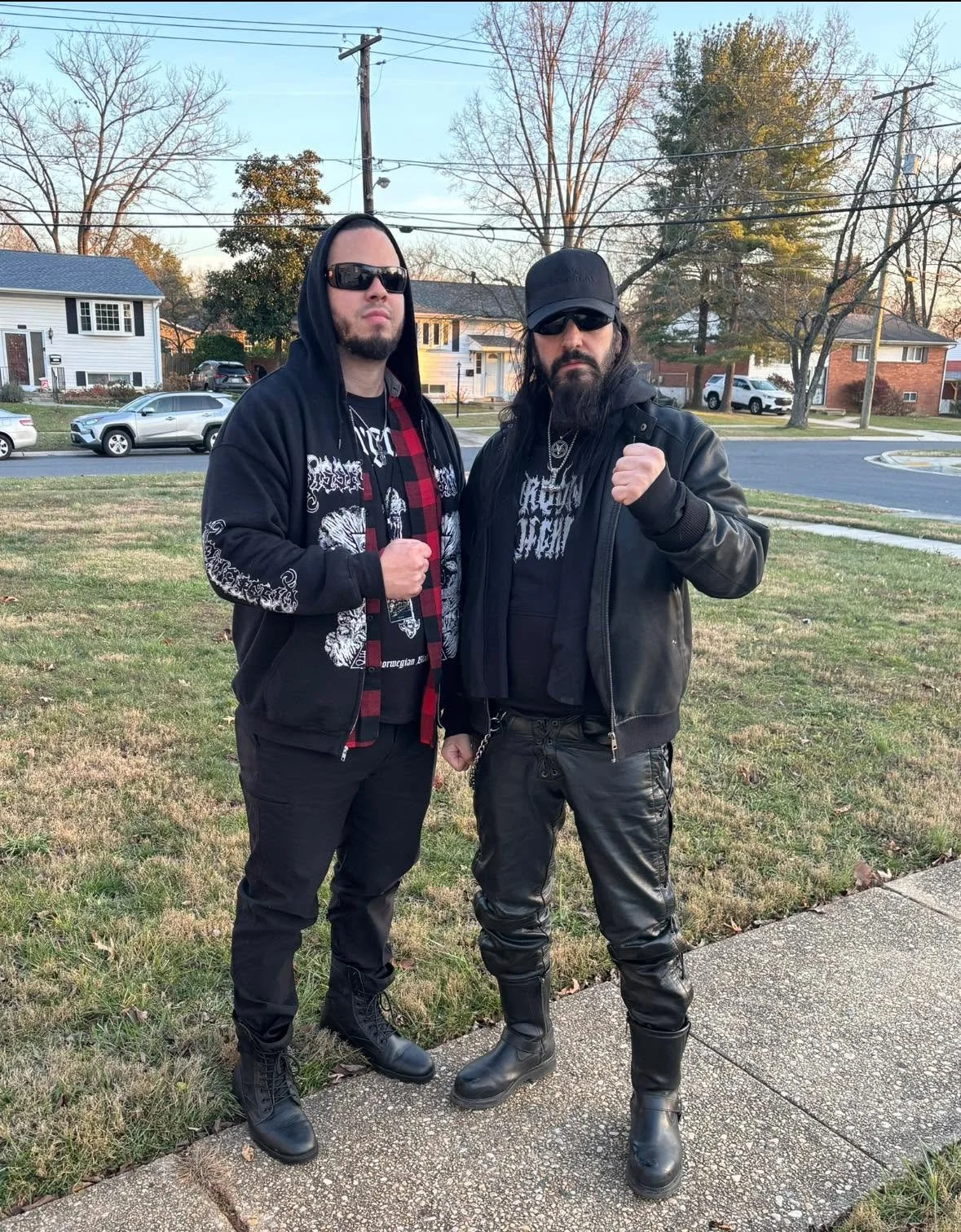
FMP: The underground has transformed dramatically since you first became part of it. Looking at the scene today, what do you think has been lost in that transformation—and what has emerged that the underground of your generation could never have imagined?
King Demogorgon: I think one of the biggest things the underground lost was the opportunity to remain truly unique. When Spotify, Apple Music and streaming in general came along, everything became available immediately. I only put Sardonic Witchery on streaming around 2022, about four years ago. Even today, I barely listen to music on those platforms. For me, it’s mostly YouTube or Bandcamp. I remember people at shows asking me, “Do you have your music on Spotify?” and I would say, “Of course not. I’m underground. I don’t belong there.” I honestly didn’t even realize that so many underground bands and labels were already using those platforms. Then friends and maniacs started telling me, “You’re missing an opportunity. Other underground bands are already doing it.” Eventually I realized that fucking everyone was there already. I couldn’t believe it-some of the bands and labels that were references for me had been on those platforms for years. So eventually I put Sardonic Witchery there too. But honestly, I’m still sad about it.
I think we had an opportunity to make extreme metal into something even more cult-something you had to search for, something you could only really experience through physical releases, maybe a few places like YouTube or Bandcamp. Instead, everything became available like fucking pop music. You can open an app and listen to almost anything immediately. We lost some of that mystery and exclusivity that made underground metal special to me. And I know I can’t change the world by myself, so I stopped fighting that battle. But our priority is still physical releases. That’s what matters to me. I hope people use streaming to discover Sardonic Witchery, and then fucking buy the CD, vinyl or cassette and support the band and the labels that are keeping this culture alive. Streaming can be the door. But I still want the physical record to be the fucking house.
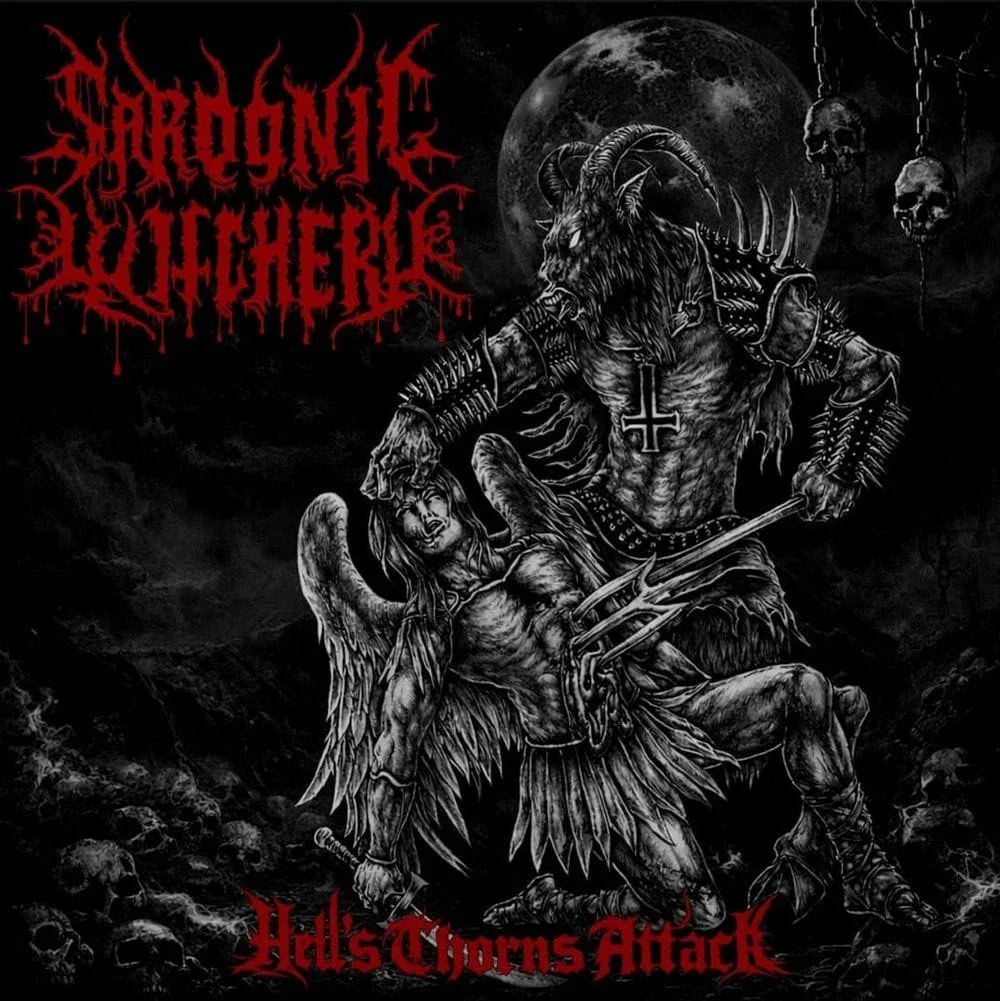
FMP: If everything can now be discovered, distributed and consumed almost instantly, perhaps the most obscure music is no longer truly hidden. In that world, where do you think the spirit of the underground actually survives?
King Demogorgon: For me, the underground still survives in the relationships between the bands and the people. You can have Spotify, Instagram, YouTube, whatever the fuck you want, but there are still things that separate the real underground from everything else.
For example, you contact a band and ask, “Can we do a trade?” And they answer, “Yes, of course!” That’s underground to me. You exchange your CD, tape, vinyl, shirt, whatever you have, and you support each other without everything being about money. But when you ask a band, “Can we do a trade?” and they start giving you ten fucking reasons why they can’t-“we don’t do that,” “we only sell,” “send money first”-then sometimes you start thinking, “Hmm… something doesn’t feel right here.” It’s not about being poor or refusing to make money. Underground bands and labels need money to survive. But the attitude is important. If you understand the idea of supporting another band because you are part of the same fucking scene, then you understand the underground. That’s where the spirit still survives-not inside Spotify or any platform, but between the maniacs who still support each other.
FMP: Sardonic Witchery has existed within an underground that stretches far beyond Portugal, connecting you with musicians and labels across Europe, Latin America and the United States. What have those connections given you artistically that you could never have found by remaining within a single scene?
King Demogorgon: Honestly, almost everything. Sardonic Witchery would never be what it is today if I had stayed inside only one scene.
Coming from Portugal and then building the band from the United States, I was able to experience very different scenes, different ways of thinking, different sounds and different people. I’ve met maniacs from Europe, Latin America, the US and many other places, and every connection brought something.
Sometimes it’s not even musical. You learn from the way another band organizes itself, how a label works, how people support each other, how shows are created. You see how different scenes survive and what they care about. And then you share a stage with bands you respected for years and suddenly you’re standing there playing your own songs with them. That changes you. That’s probably the biggest thing the underground gave me: perspective. It showed me that Sardonic Witchery doesn’t belong to just Portugal, Texas, or any one scene.
The underground became our fucking world.
FMP: You've also been involved in an enormous number of shows and projects throughout your career. After all these years, what still makes you step onto a stage and give everything to a performance?
King Demogorgon: The fucking feeling. But there is another side to it that people who have followed Sardonic Witchery for years probably understand.
I’ve had to improvise a lot. I’ve had musicians agree to play with me and then cancel one week before a show like fucking pussies. But I don’t really remember cancelling shows because of that. I found a way to make it happen anyway. I’ve dealt with unexpected situations for years, and practically nothing has stopped me from getting on that stage. People who have been following the band closely have seen that over the years. They know I’m a man of my fucking word. If I say Sardonic Witchery is going to play, I will do everything I can to make it happen. Now, with better and more disciplined musicians beside me, I finally feel like I can stop worrying so much about everything around the performance and concentrate on my own fucking performance. That’s something I’ve been waiting for for years. I can finally walk onto the stage and think about one thing: Chaos and Satanic Rock N’ Roll!
And honestly, that’s fucking amazing. After all these years, I feel like Sardonic Witchery’s real time has finally arrived.
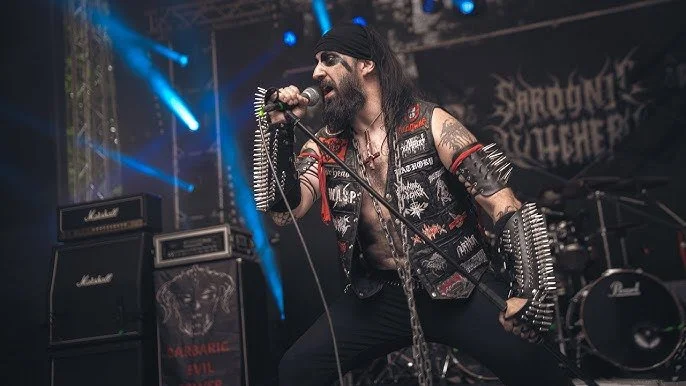
FMP: So having now dived into the mindset and philosophical beliefs that is Sardonic Witchery, peered into the blasphemous flames that had given birth to the band so many years ago, I would like to pull back the veil of the unknown if I may. Let us look forward to what is to come next for Sardonic Witchery. Any details of future plans would be greatly appreciated.
King Demogorgon: Right now, we want to fucking profit from everything we’ve built with Hell’s Thorns Attack. The album is still on fire. Every day I’m receiving messages and calls from maniacs congratulating us on the record, and that’s fucking amazing to see. We were supposed to present the album live in the US on tour with our friends from Poland, Besatt, but unfortunately that didn’t happen. The promoter, Visions Of Death Booking, never honored the agreement to pay our flights from home to the starting point of the tour and back home at the end. That was extremely frustrating because this tour had been booked about a year and a half in advance, and we had prepared everything-including the new album-for it. So now we’re focusing on the opportunities that are actually in front of us. Our first appearance in Mexico is coming, with two shows: October 30 in Mexico City and October 31 in León, Guanajuato. We also have an exclusive South American show confirmed in Brazil that will be announced soon. We’re looking for more opportunities to bring Hell’s Thorns Attack to the stage, and we’re open to fucking everything. And yes, we’re probably looking toward a return to Portugal and Europe as well. We’re working on it, so people should stay tuned to our social media because more things will be announced soon. But we’re not stopping there. While we’re taking Hell’s Thorns Attack as far as we can, we’re already starting to put the next album together. I don’t want to wait five years before thinking about another record. Things are already starting to align, and when the time is right, we’ll attack again. Hell’s Thorns Attack is burning right now. We’re going to fucking enjoy that fire-and then build an even bigger one.
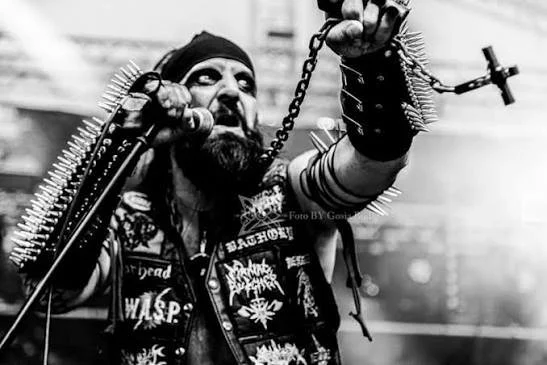
FMP: Having now completed five full-lengths, what artistic freedom does Hell's Thorns Attack give you that simply wasn't possible for Sardonic Witchery ten years ago?
King Demogorgon: A lot more. Ten years ago, I had the ideas, but I didn’t always have the people, experience or conditions to make everything I heard in my head become reality. Now Sardonic Witchery is a duo with G. Lucis Ruina, and that changes fucking everything. He brings his own composition, guitars, bass and production, and I finally have someone beside me who can understand an idea and help turn it into exactly what we want. Hell’s Thorns Attack also gave us the confidence to say, “Fuck it, let’s do exactly what we want.” We don’t need to prove that we can make a black metal record or a thrash record. We can take everything we love, smash it together and make it Sardonic Witchery. And after five albums, I know myself much better as a musician. I know what I want, what I don’t want, and what I won’t compromise.
FMP: After five full-lengths, are there any boundaries you've deliberately maintained within Sardonic Witchery that you're now tempted to break—not because you've rejected what came before, but because you're curious about what exists beyond those boundaries?
King Demogorgon: Honestly, no. I don’t feel like we need to break any boundaries. Sardonic Witchery has its own identity, and I’m not interested in changing that just for the sake of saying we’ve done something different. We can evolve, become more aggressive, improve the songwriting, production and everything around it, but the essence stays. After five albums, we know what Sardonic Witchery is. And I don’t see those boundaries as a prison. They’re part of what makes the band what it is. With G. Lucis Ruina beside me, we have more possibilities than ever, but that doesn’t mean we’re going to suddenly become something else. We’re going to keep pushing within our own world and see how far we can take it.
We don’t need to break the fucking walls. We just need to make the room bigger.
FMP: What does the future look like beyond this album—more touring, festivals, new collaborations, splits, or simply disappearing back into the underground to begin creating again?
King Demogorgon: Right now we want to take Hell’s Thorns Attack as far as we fucking can—more shows, festivals, Mexico, Brazil, hopefully Portugal and Europe again, and whatever other opportunities make sense. At the same time, we’re already starting to work on the next album. I work on Sardonic Witchery every fucking day. It’s not something I do only when I have an album to release or a show coming up. It’s part of myself. It’s part of my life.
So disappearing from the underground? No fucking chance. As long as I’m alive, you will keep hearing the name Sardonic Witchery in the underground. I don’t know for how many more years, but until the day I die, this fucking name is going to be there. And honestly, I enjoy the war, because I know the peace will be fucking terrible hahaha
FMP: After five full-lengths and more than a decade of Sardonic Witchery, what is the one creative territory you still feel you haven't conquered?
King Demogorgon: Honestly, there are still some territories where Sardonic Witchery hasn’t fucking conquered yet. The West Coast of America, Scandinavia and Asia. Those are definitely places I want to reach. We’ve already built strong connections in Europe, Latin America and the US, but those scenes are still waiting for us. I want to play there, meet the maniacs, share stages with the bands, and bring Sardonic Witchery directly to those fucking scenes.
So that’s the territory left to conquer. We’re coming.
FMP: For someone discovering Sardonic Witchery for the first time through Hell's Thorns Attack, what do you hope they discover beneath the noise, aggression and darkness that perhaps isn't immediately visible on the surface?
King Demogorgon: At any time, I want people to feel the rawness, the chaos, the pure fucking Metal of Steel and the fucking Rock N’ Roll in Sardonic Witchery. That’s what has always been there. Beyond the darkness, the aggression and all the fucking noise, I want you to feel something alive, dangerous and unpredictable.
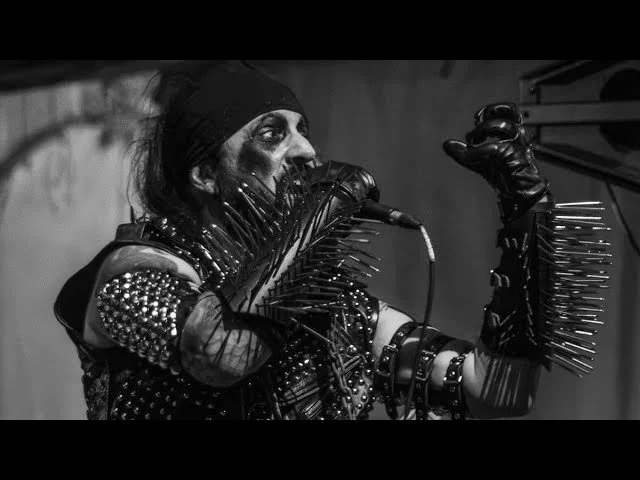
FMP: Finally, when the final Sardonic Witchery recording has been made, the final show has been played, and there is nothing left to create—what do you want the band to have left behind?
King Demogorgon: I don’t think about the final recording or the final show. As long as I’m alive, I keep fucking fighting and delivering chaos in this hell that is Earth.
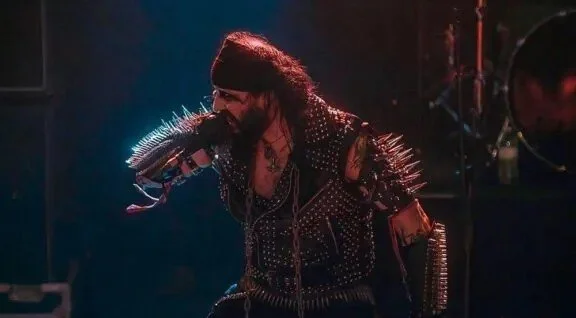
FMP: Do you have any final words for the maniacs who have followed Sardonic Witchery throughout the years—and to those who are just now stepping into the darkness?
King Demogorgon: First of all thank you to Frozen Moon Promotions for the opportunity to speak about Sardonic Witchery!
To the maniacs who have been with us since the beginning, fucking thank you. You know who you are. You’ve been there through the records, the shows, the chaos, the good times and the fucking disasters. Sardonic Witchery would not be what it is without you.
To the maniacs discovering us now: welcome to the fucking chaos. Don’t just listen to the music-come to the shows, support the bands, buy the physical releases, trade with other maniacs, support the labels and keep the underground alive.
And to everyone: no fear, no mercy. Let’s fucking fight.
Sardonic Witchery will keep delivering chaos in this hell that is Earth.
Enjoy this fucking war, because the peace will be terrible.
Hellish Regards,
King Demogorgon
SARDONIC WITCHERY
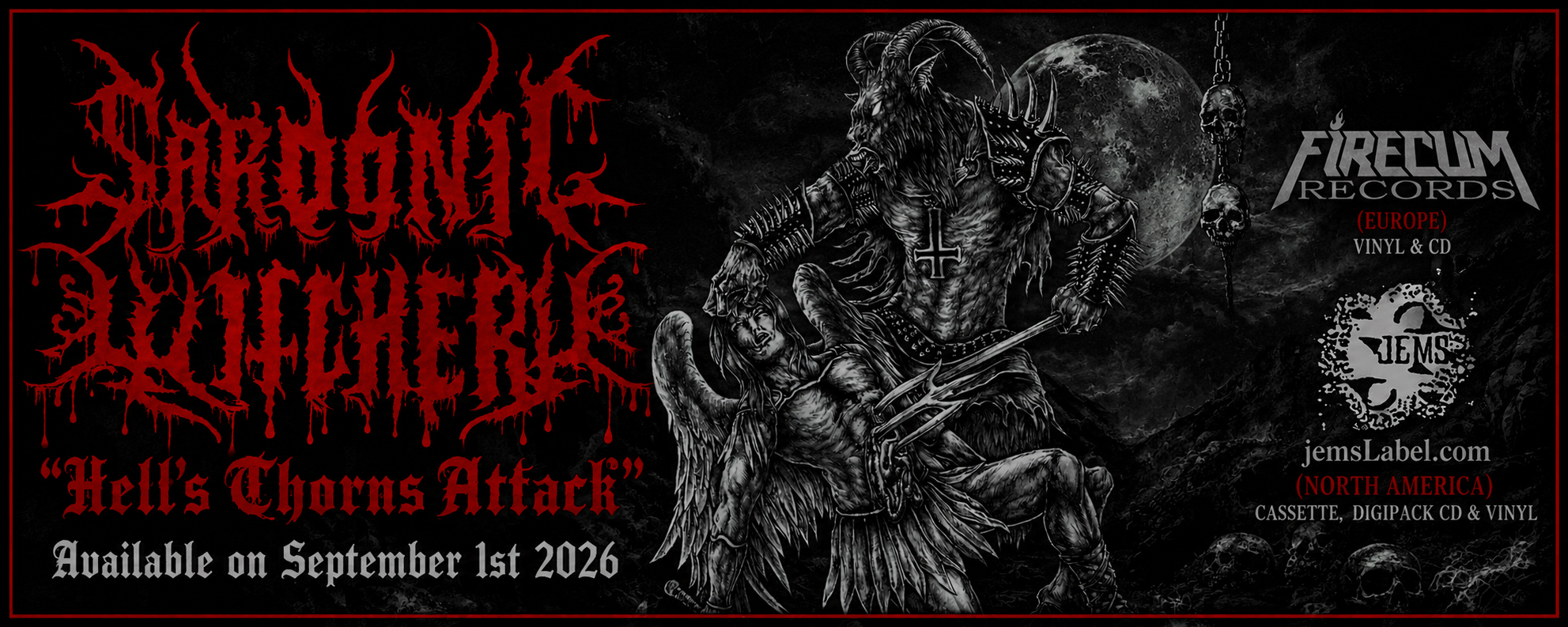
For more than a decade, Sardonic Witchery has remained a testament to the persistence of the underground spirit—uncompromising, unapologetic, and unwilling to bend itself toward whatever happens to be fashionable. With a new full-length already out we can only speculate what is beyond the horizon, Sardonic Witchery's story is far from finished.
I would personally like to thank King Demogorgon of Sardonic Witchery for taking the time to sit down with us and allow me to look back at the the shrouded blasphemy that gave birth to this band so long ago but to delve into the murky unknown of what is to come. From Philosophy to musical creation, it was a pleasure to get to know you and the diabolical creation of Sardonic Witchery.